


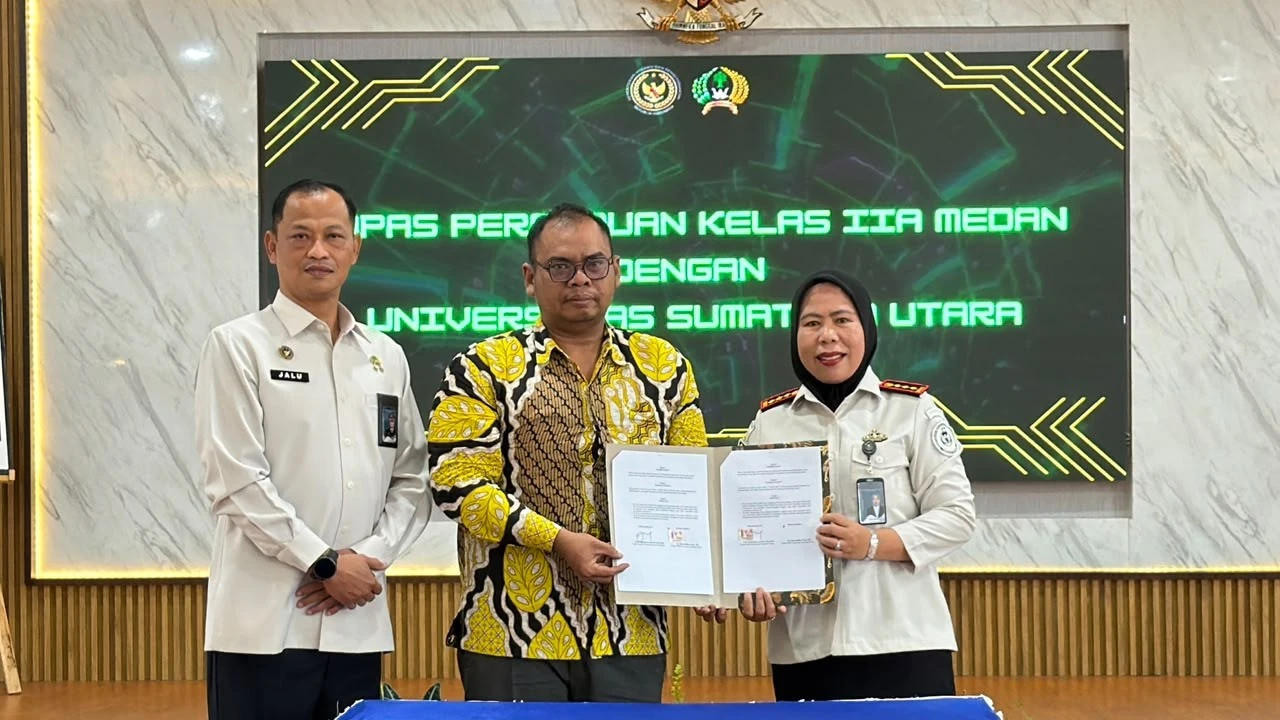
Medan, 4 August 2026 – The Faculty of Social and Political Sciences (FISIP) of Universitas Sumatera Utara (USU) strengthened its strategic partnership network through the signing of a Cooperation Agreement (PKS) with the Medan Class IIA Women’s Correctional Facility on Tuesday (August 4, 2026). The partnership is part of FISIP USU’s efforts to expand the implementation of the Three Pillars of Higher Education while supporting inclusive and sustainable social development.
As the Dean of FISIP USU was unable to attend, the signing of the Cooperation Agreement was represented by the Head of the Social Welfare Study Program at FISIP USU, Fajar Utama Ritonga, S.Sos., M.Kesos. The involvement of the Social Welfare Study Program is an important part of the implementation of the partnership, given the direct relevance of the field of social welfare to the empowerment, assistance, and social reintegration of inmates.
The partnership covers the areas of education, research, and community service. Its implementation may include curriculum development, collaborative research, scientific publications, seminars, training, and various empowerment activities involving lecturers and students.
As part of the implementation of the partnership, the Social Welfare Study Program at FISIP USU will develop programs focusing on capacity building, social assistance, and skills development for inmates. These activities are expected to support the rehabilitation and social reintegration process while providing students with field-based learning experiences in applying social welfare knowledge.
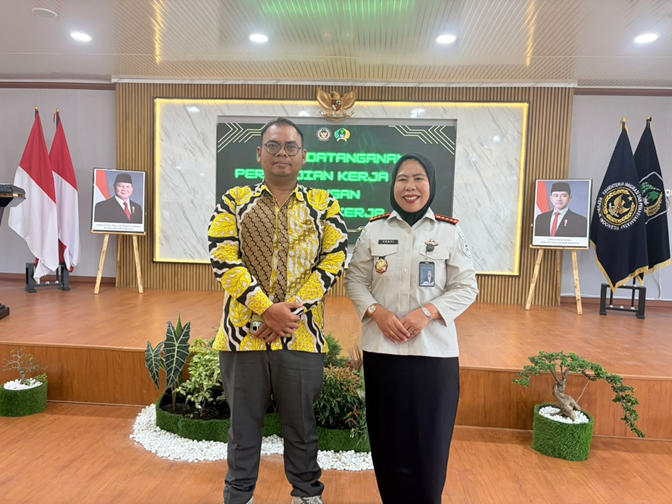
Fajar Utama Ritonga explained that the partnership provides a broader perspective on the role of social welfare in supporting inmates and former inmates. Under Minister of Social Affairs Regulation No. 5 of 2019, former inmates are included in the category of Persons in Need of Social Welfare Services (PPKS).
According to him, approaches to inmates have often been viewed primarily from a legal perspective. Through this partnership, there is an opportunity for students, alumni, and lecturers in Social Welfare to contribute through assessments, research, monitoring, and social interventions.
“This partnership provides a collaborative space for lecturers and students to implement the Three Pillars of Higher Education through education, research, and community service activities. We hope that the various programs to be implemented will not only benefit inmates but also provide meaningful learning experiences for students and strengthen FISIP USU’s contribution to inclusive and sustainable social development,” said Fajar.
One potential form of intervention is the group work method in community social work. This approach can be used to support the empowerment and capacity building of inmates through structured activities tailored to their needs.
Through this partnership, FISIP USU and the Medan Class IIA Women’s Correctional Facility are expected to develop various collaborative programs that benefit both institutions and the wider community. For FISIP USU, the partnership also serves as a means of strengthening the connection between academic learning and real-world needs.
The initiative supports SDG 4: Quality Education through the development of contextual learning and field-based experiences for students. The partnership is also aligned with SDG 17: Partnerships for the Goals by strengthening collaboration between higher education institutions and correctional facilities in support of sustainable social development.
Through this partnership, FISIP USU reaffirms its commitment to expanding its partnership network and implementing the Three Pillars of Higher Education in ways that create tangible benefits for society, particularly by supporting the empowerment, rehabilitation, and social reintegration of inmates.