


The presence of Dr. Gauri Kopardekar, ICCR Chair Professor, at the Faculty of Social and Political Sciences, Universitas Sumatera Utara, demonstrates how academic activities can function as effective practices of cultural diplomacy. Through her involvement in various academic and cultural activities, FISIP USU becomes not only a learning space but also an arena for the exchange of meanings, values, and cross-cultural perspectives, thereby strengthening the university's role in non-state diplomacy based on education and culture.
In the context of Communication Studies, particularly film studies, the activities facilitated by Dr. Gauri position audiovisual media as a medium of cross-cultural communication. Film is understood as a social text that represents culture, social relations, and universal values, and therefore can be critically analyzed. This approach aligns with the tradition of film studies in Communication Studies, which views film not merely as entertainment but as a medium that shapes perceptions, identities, and social understanding.
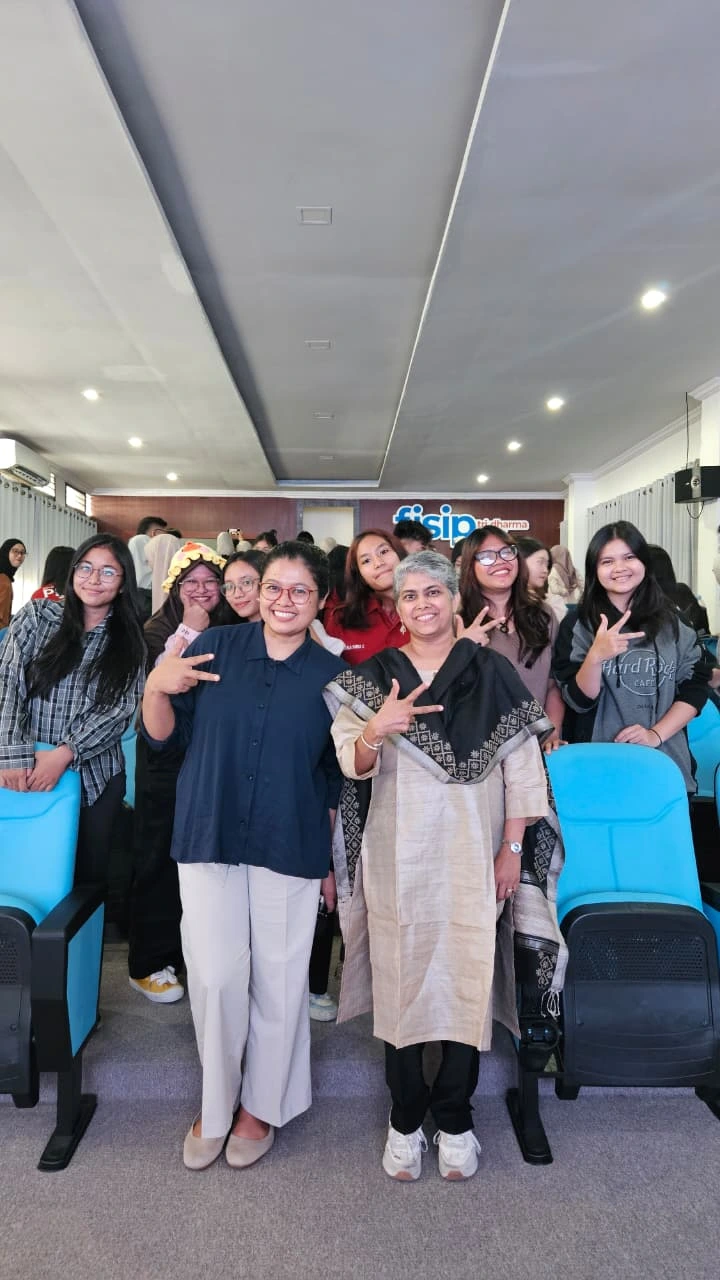
Through programs such as the Indian Movie Club, students are invited to read films within the framework of cultural communication, understand the social contexts behind them, and compare them with social realities in Indonesia. The discussions accompanying the film screenings open spaces for equal cross-cultural dialogue while encouraging the development of media literacy and cross-cultural sensitivity. In this practice, cultural diplomacy takes place subtly through the power of narrative and visuals, without an instructive or one-way approach.
Within the framework of Communication Studies, this approach further emphasizes the position of film as a medium of cultural communication capable of opening spaces for dialogue across perspectives. This practice is considered relevant to the development of film studies and media literacy within the FISIP USU environment, as conveyed by Farida Hanim, S.Sos., M.I.Kom, a lecturer in Communication Studies.
“In the study of Communication Science, film holds a strategic position as a medium of cultural communication that not only conveys messages, but also shapes the audience’s perspectives on social reality. Therefore, an analytical approach to film becomes important to open spaces for dialogue across perspectives, while at the same time training critical sensitivity toward representations of values, identities, and power relations. In this case, we are speaking in the context of Indian films, which at one time dominated television broadcasts in Indonesia.”
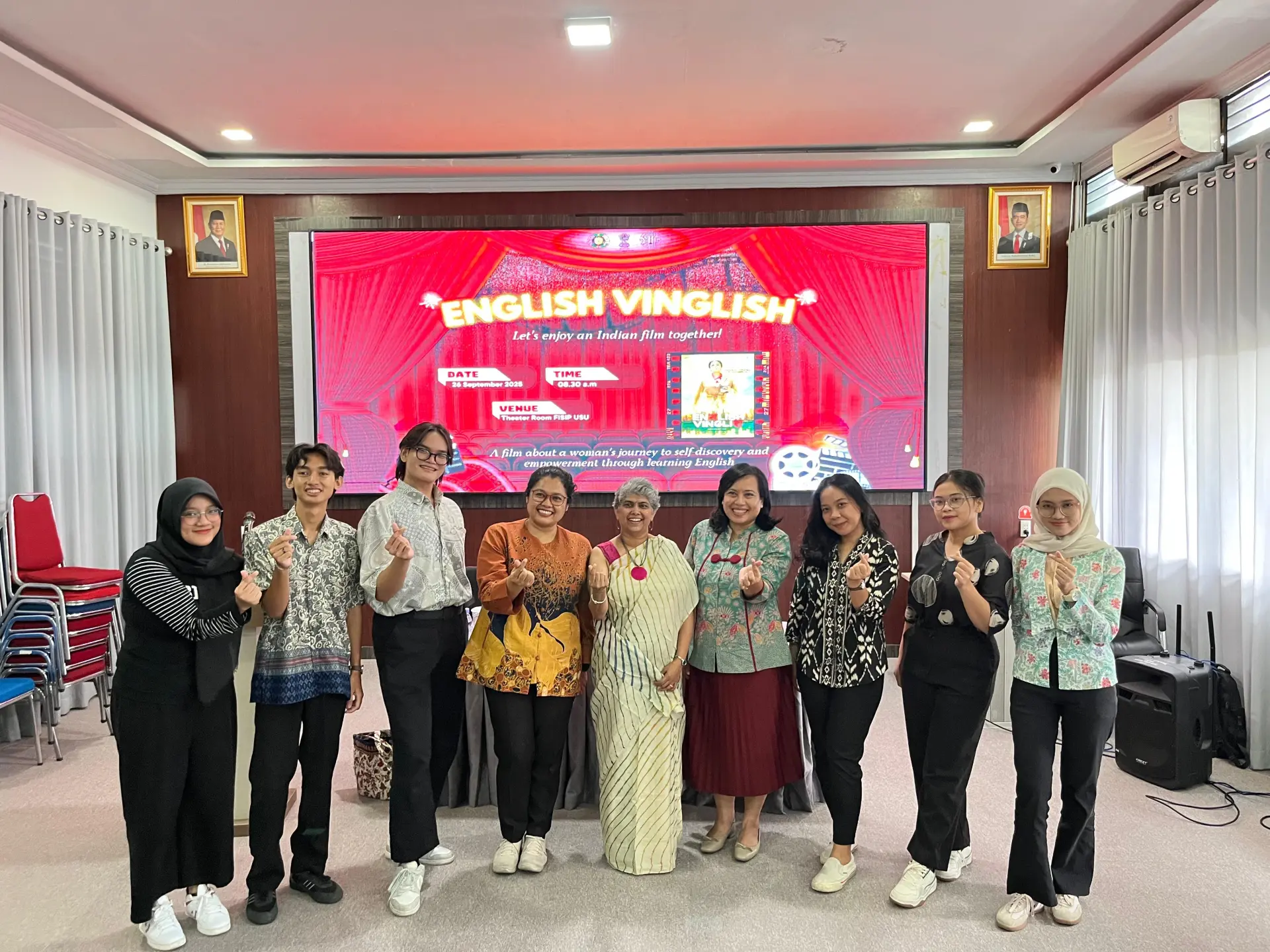
As an ICCR Chair Professor, Dr. Gauri Kopardekar carries a cultural mandate integrated with academic functions. However, what stands out is her dialogical approach that positions students as active subjects in the process of cultural communication. The campus does not merely serve as a site for representing foreign cultures, but also as a space for the meeting of ideas and the dynamic exchange of meanings.
This engagement contributes to strengthening the internationalization of FISIP USU by providing contextual and globally oriented learning experiences. Students not only gain knowledge about other cultures, but are also encouraged to reflect on their own culture through the perspectives of communication and media. Thus, this series of academic and cultural activities demonstrates that cultural diplomacy within the campus environment can operate in a substantive, relevant, and sustainable manner.
Penulis: Tabitha R. Simbolon