


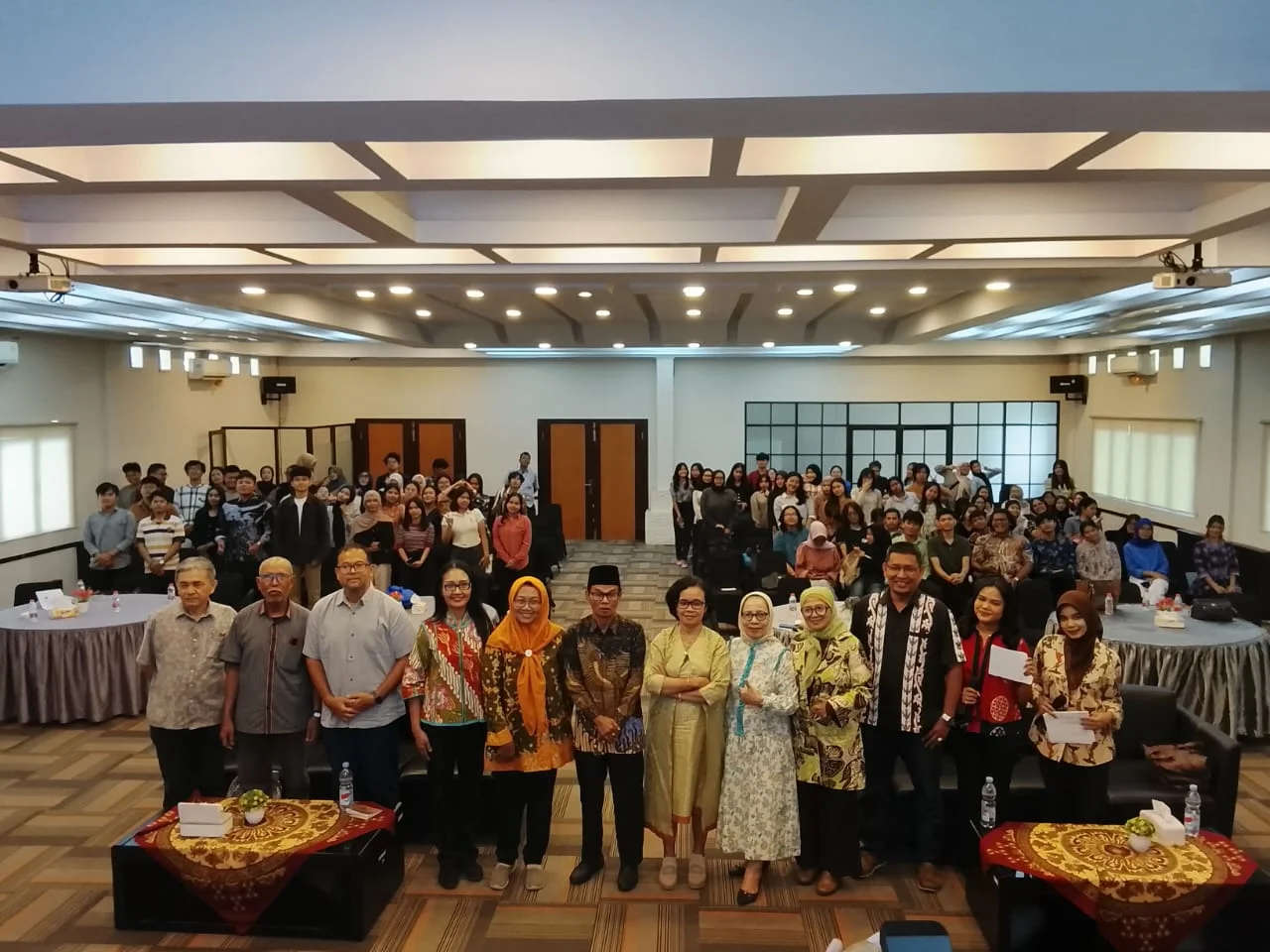
The Undergraduate Program in Social Anthropology at the Faculty of Social and Political Sciences (FISIP), Universitas Sumatera Utara, held a Visiting Professor activity on November 18, 2025, featuring Prof. Dr. Atik Triratnawati, M.A., Professor of Health Anthropology from Universitas Gadjah Mada (UGM). This activity was designed to strengthen academic networks, improve the quality of education, and deepen Anthropology students’ insights into the relationship between health and culture.
As part of the program series, Prof. Atik presented the theme “Masuk Angin: Science or the Supernatural,” material drawn from her inauguration speech as a Professor at UGM. In the speech, she explained that masuk angin is not merely a medical concept, but a cultural phenomenon that traverses the realms of health and traditional belief. According to Prof. Atik, Javanese society recognizes three types of masuk angin: mild, severe, and kasep (or angin duduk). The mild category is characterized by symptoms such as bloating, a sensation of heat, and body aches. Meanwhile, the severe type appears when a person delays rest or meals, then experiences vomiting or diarrhea. The kasep type is the most serious form, in which symptoms may appear suddenly and are associated with chest pain.
In her presentation at FISIP USU, Prof. Atik also discussed traditional treatment methods related to this phenomenon, such as kerokan using coins and rubbing oil, which she noted play an important role in cultural traditions. Regarded as a communal healing method among Javanese communities, kerokan is sometimes performed collectively and is considered effective in balancing body temperature and improving blood circulation.
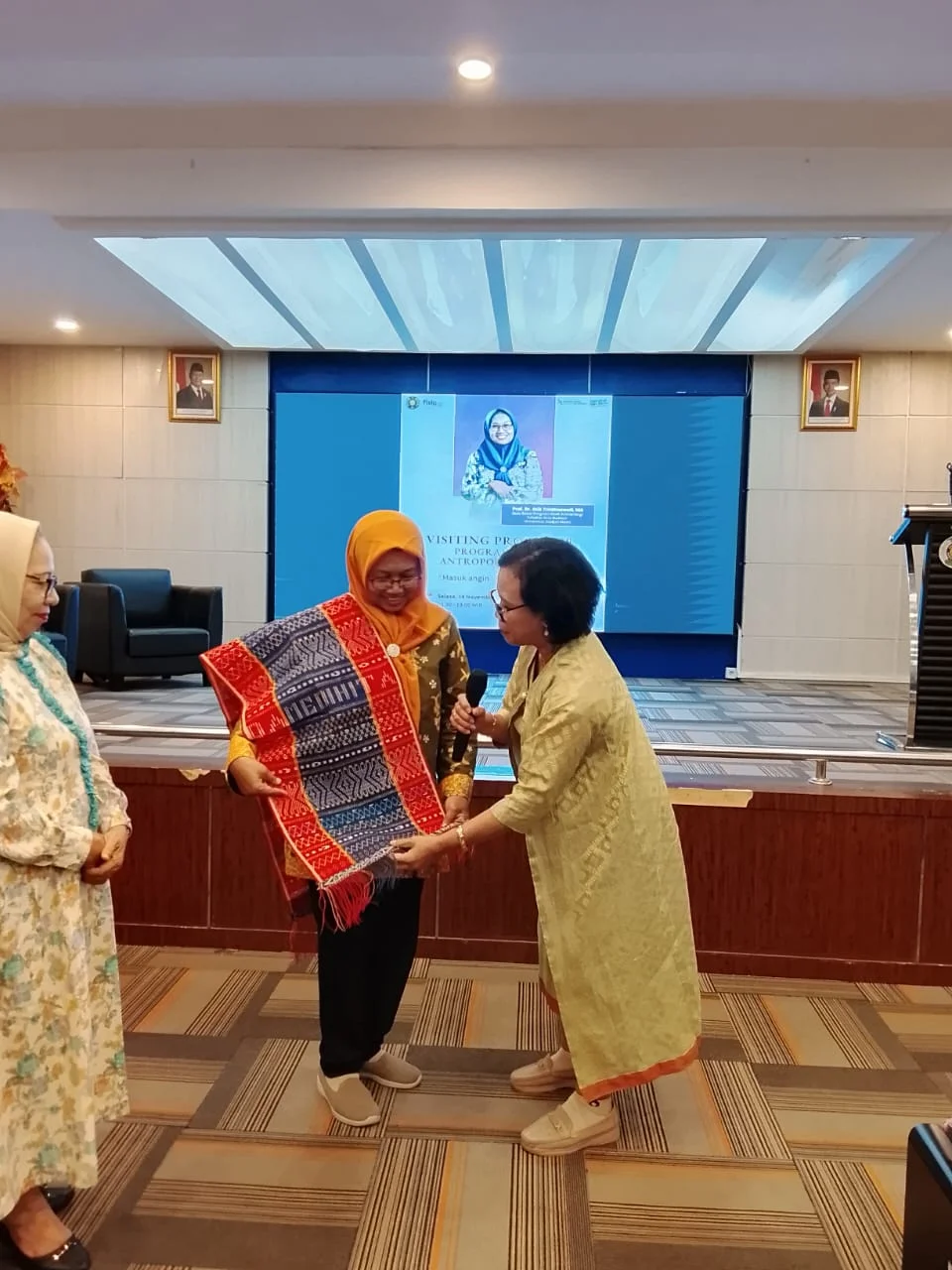
The students enthusiastically explored further how health anthropology approaches can be used to interpret cultural phenomena such as masuk angin in the daily lives of Indonesian society. This ranged from methodological aspects, differences between medical and cultural perspectives, to how practices such as kerokan shape the identity and health experiences of a community. This reflects students’ interest in understanding the relationship between local knowledge, traditional beliefs, and social constructions of the body and illness. For many participants, the opportunity to engage in direct dialogue with a UGM Professor became a learning space that enriched their perspectives on the broader and deeper study of health anthropology.
The presence of Prof. Atik at FISIP USU not only broadened academic horizons, but also strengthened research networks between the campus and national experts. Through this collaboration, FISIP USU reaffirmed its mission to create an academic environment that is open and critical toward local cultural issues. Programs like this align with the institution’s efforts to strengthen the curriculum, support scientific publications, and produce graduates who are able to understand social and cultural complexities in the context of public health.
Penulis: Jemima Frieda Lumbantobing