


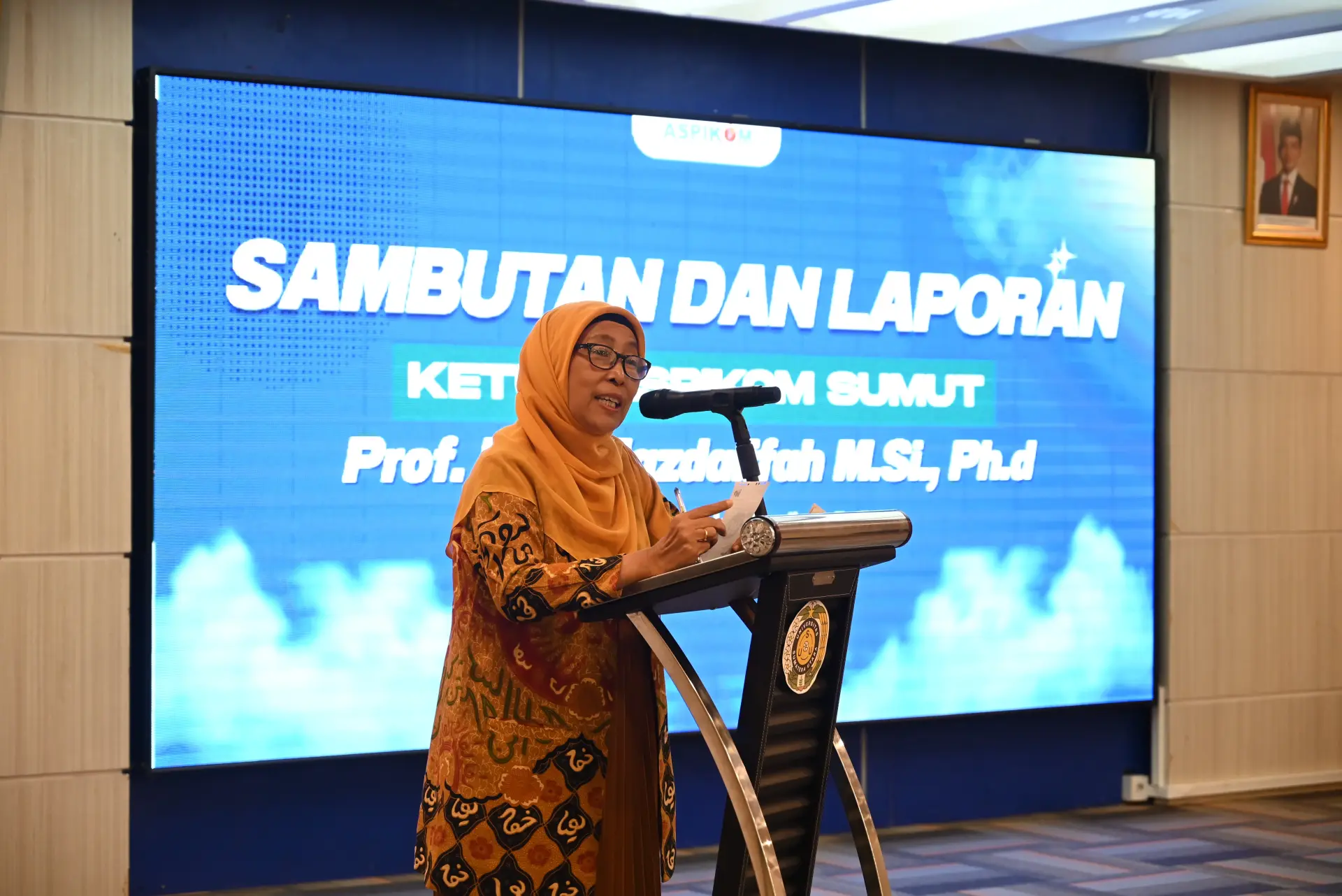
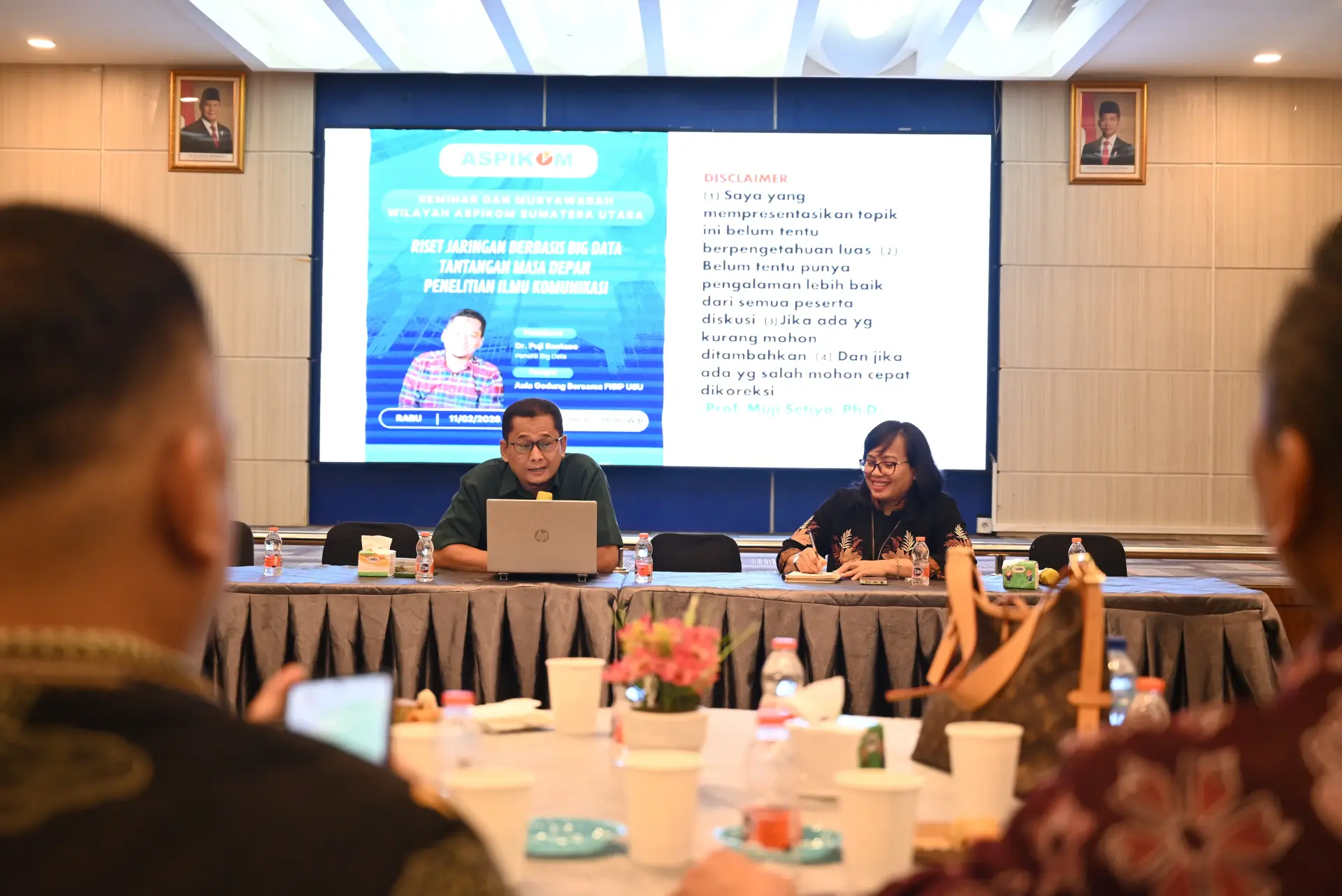
The Communication Studies Program of the Faculty of Social and Political Sciences (FISIP), Universitas Sumatera Utara, served as the host for the Seminar and Regional Assembly (Musyawarah Wilayah/Muswil) of the Association of Higher Education in Communication Studies (ASPIKOM) for the North Sumatra Region. The event, themed “Big Data–Based Network Research: Future Challenges in Communication Studies Research,” was held at the Joint Building Hall of FISIP USU on Wednesday (11 February 2026). The activity featured Dr. Puji Santoso as the keynote speaker and was attended by lecturers and Communication Studies students from various universities across North Sumatra.
The seminar served as an academic forum highlighting the transformation of communication research in the digital era. The development of social media and digital platforms is considered to have generated massive data traces that can be used to more comprehensively analyze communication patterns, network structures, and the dynamics of public opinion.
In his presentation, Dr. Puji Santoso explained that big-data–based research approaches, particularly through the Social Network Analysis (SNA) method, open new opportunities to understand relationships and interactions among actors in digital spaces. With the support of network analysis software, researchers can map communication patterns, identify key actors, and analyze trends in public conversations more systematically.
He emphasized that big data is not only about the large volume of data, but also about its velocity, variety, and analytical capability. In the context of Communication Studies, this approach is relevant for examining issues such as the formation of public opinion, social media framing, discourse polarization, and the dynamics of digital political communication.
Nevertheless, he also reminded participants that the use of big data must continue to consider methodological and ethical aspects of research. Data validity, algorithmic bias, and academic responsibility in managing digital data are challenges that communication researchers need to anticipate.
The seminar received positive responses from participants, particularly students who viewed the big data material as reinforcing the direction of development for the Communication Studies discipline in the era of social media and digital transformation.
Annisa Al Mahgfira, a Communication Studies student who participated in the seminar, stated that the material presented was highly relevant to the current competency needs of communication students.
“This big data material is truly something important for the discipline and competencies of Communication Studies students. Especially since communication today is already based on digital media, which, if we want to analyze it, requires big data and the ability to process it. So if topics like this are explored more deeply for communication students, research for theses and similar projects will also become easier,” she said.
Through this activity, ASPIKOM North Sumatra reaffirmed its commitment to encouraging methodological innovation and strengthening academic capacity. The seminar and Regional Assembly are expected to serve as a strategic momentum to strengthen the position of Communication Studies in responding to the continuously evolving media and technology landscape.
In addition to the seminar, the event was also combined with the ASPIKOM North Sumatra Regional Assembly, which discussed strengthening networks among Communication Studies programs, improving the quality of education, and adapting curricula to developments in digital communication technology.
Author: Tabitha R. Simbolon