


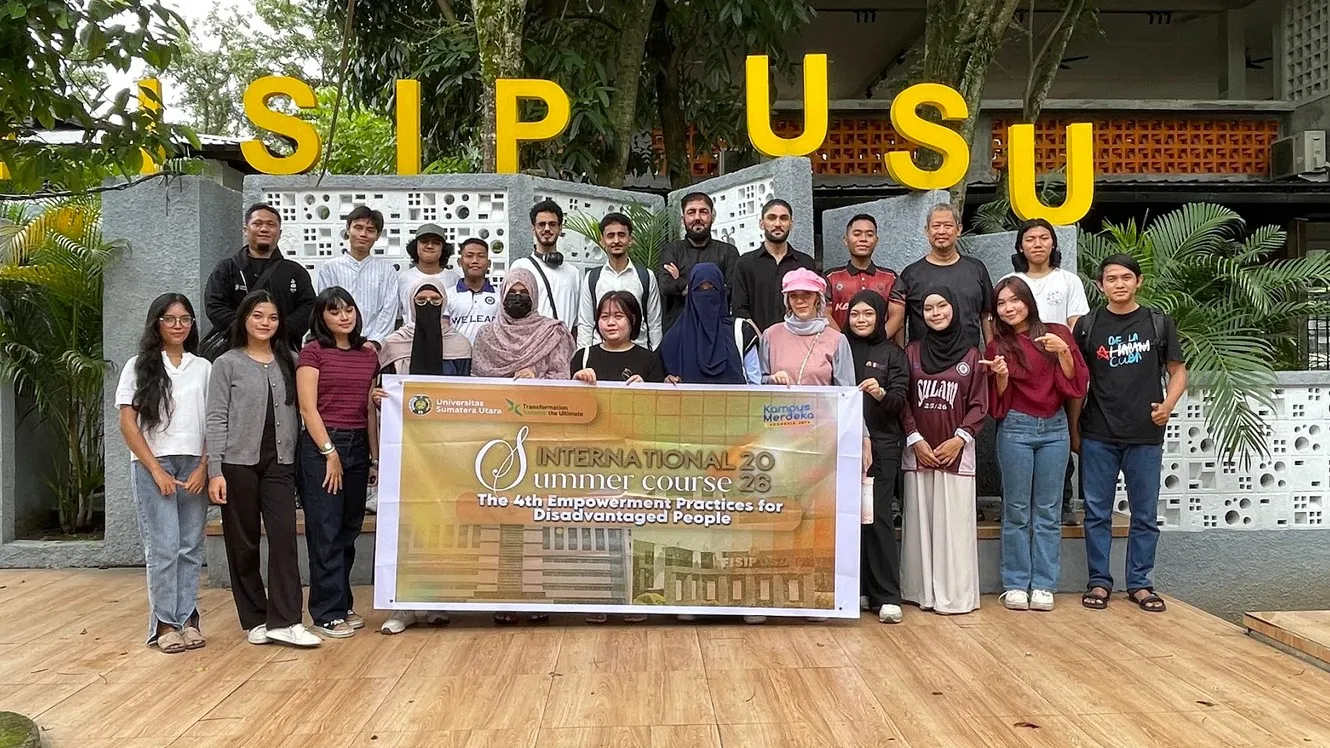
MEDAN – The Social Welfare Study Program, Faculty of Social and Political Sciences (FISIP), Universitas Sumatera Utara (USU), organized the International Summer Course 2026 with the theme “The 4th Empowerment Practices for Disadvantaged People” on October 24–31, 2026. This activity was conducted in a hybrid format through a combination of online learning (online course) and field learning activities (field trip) in the Lake Toba area, North Sumatra.
The organization of this activity represents one of the commitments of the Social Welfare Study Program, FISIP USU, to strengthening the internationalization of higher education, expanding academic cooperation networks, and encouraging the exchange of knowledge and experiences in the fields of social welfare and community empowerment. Through this activity, participants were given the opportunity to understand various approaches, policies, and practices for empowering vulnerable and disadvantaged groups (disadvantaged people) from an international perspective.
The series of activities began with online learning sessions featuring international speakers from various countries, including the Philippines and Malaysia. The presence of international speakers provided participants with the opportunity to gain broader insights into the differences in community empowerment approaches based on the social, cultural, economic, and policy conditions of each country.
The International Summer Course 2026 was also attended by international participants from various countries with diverse cultural, social, and educational backgrounds. Some of the participants' countries of origin included Pakistan, Nigeria, Yemen, Algeria, Malaysia, and others. This diversity created opportunities for cross-cultural interaction and the exchange of experiences, enriching the learning process. Participants not only gained knowledge from the speakers but also had the opportunity to share experiences and perspectives on various social issues and empowerment practices in their respective countries.
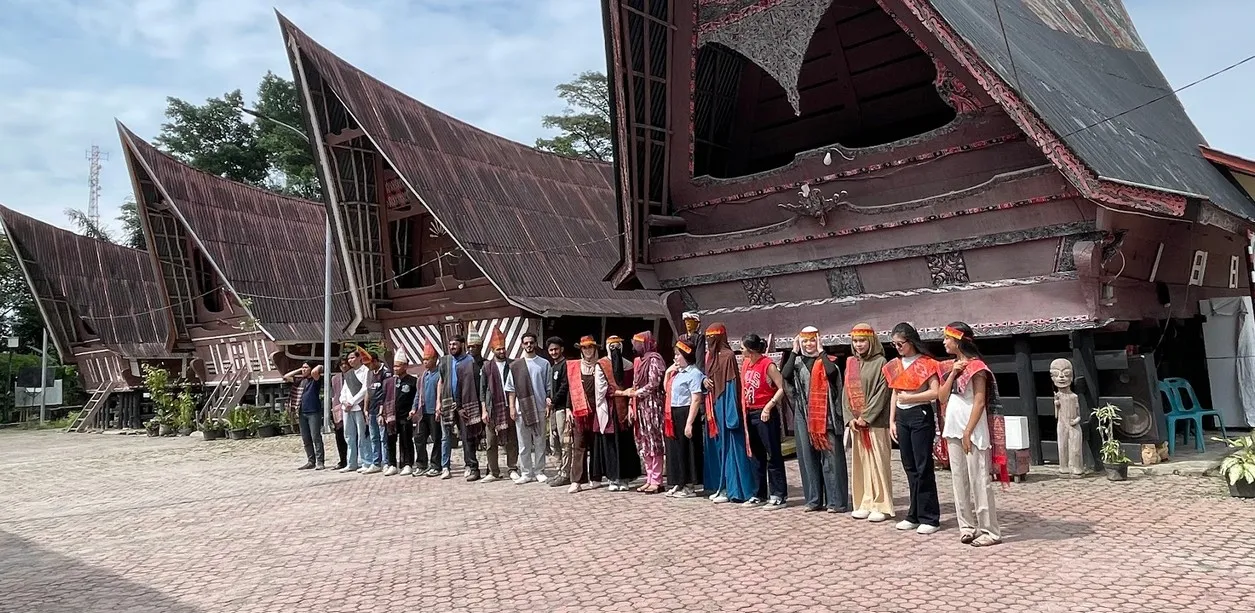
In addition to online learning, this activity also included a field trip to Samosir Island and the Lake Toba area. This activity was designed as a form of direct learning so that participants could become more familiar with regional potential, community social life, cultural richness, and tourism development based on local potential in North Sumatra.
As part of the visit, participants also visited the Toba Caldera area to learn about the natural richness and geological characteristics of the area, which has been designated as part of a UNESCO Global Geopark. This visit provided a learning experience about the importance of sustainably managing natural and cultural potential, as well as community involvement in preserving and developing local resources.
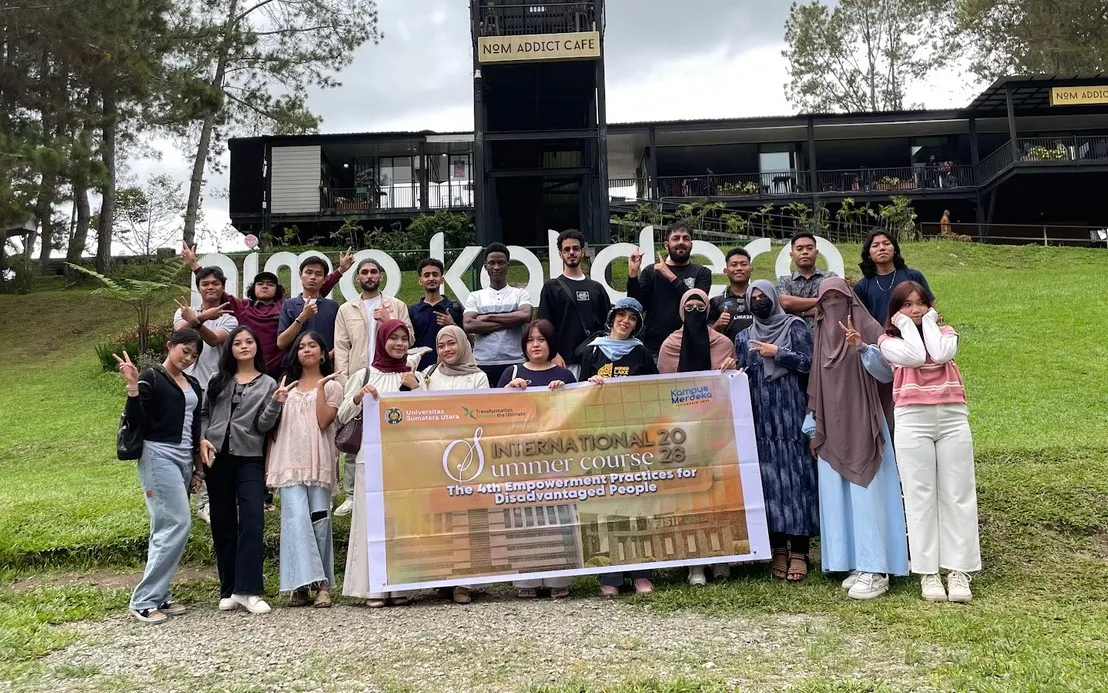
Through the field trip, participants were invited to see that community empowerment is not only related to increasing the capacity of individuals and groups but also encompasses strengthening local potential, cultural preservation, community economic development, and community participation in development. The firsthand experience in the Lake Toba area is expected to provide a more comprehensive understanding of the relationship between social welfare, community empowerment, sustainable tourism, and development based on local wisdom.
The implementation of the activity in a hybrid format was one of the efforts to provide a more inclusive and flexible international learning experience. The combination of online learning and field visits enabled participants to gain both conceptual understanding and empirical experience regarding community empowerment practices. Thus, this activity served not only as an academic forum but also as a space for cultural exchange, global insight development, and the strengthening of international networks.
Through the organization of the 4th Empowerment Practices for Disadvantaged People, the Social Welfare Study Program, FISIP USU, hopes to continue contributing to the development of social welfare studies, strengthening collaboration with international educational institutions, and encouraging the emergence of innovative, inclusive, and sustainable ideas and practices for community empowerment.