


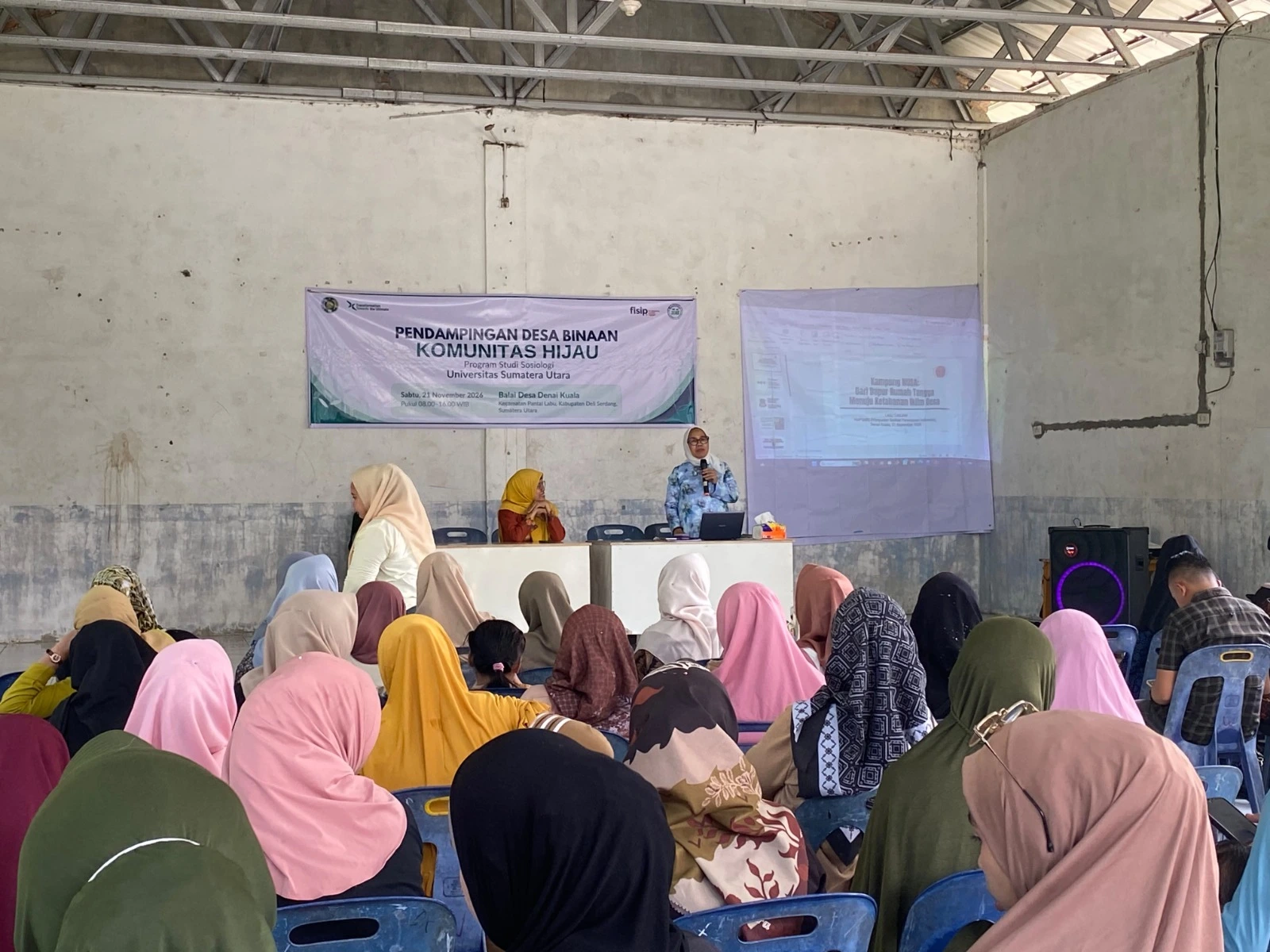
The Green Community Partner Village Assistance Activity was held on Saturday, November 21, 2026, at the Denai Kuala Village Hall, starting at 10.00 WIB. This activity aimed to expand the community's knowledge and capabilities in managing the environment, utilizing local resources, and independently strengthening household food security. The activity also involved representatives of Universitas Sumatera Utara, HAPSARI, Rumah NUSA facilitators, the Denai Kuala Village community, and students of the Sociology Study Program.
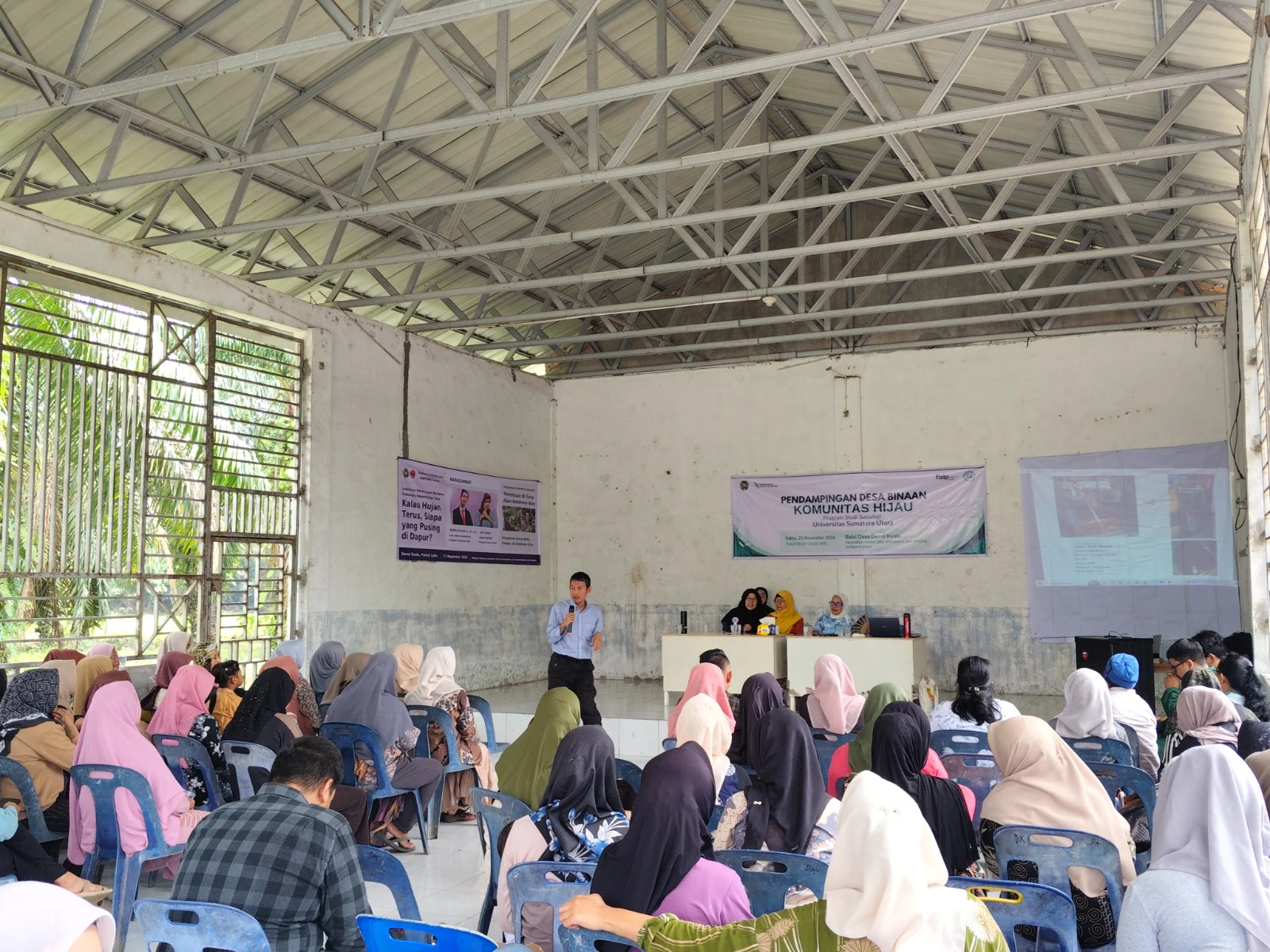
The series of activities began with a prayer led by Audrey Ichwan F. Wijaya, followed by a presentation by Mr. Bobby Umroh, S.T., M.T., Ph.D., from Star Umroh Engineering on the use of independent technology in the industrial, agricultural, and livestock sectors. In his presentation, he introduced the management of Umroh Farm, from independently providing animal feed and managing livestock pens to utilizing animal waste to produce biogas and compost. Next, Ms. Juwariah discussed the benefits of growing crops independently to reduce household expenses. Ms. Sekar explained the importance of the younger generation's role in digitalization and product marketing through Rumah NUSA, while Ms. Riyani shared HAPSARI's experience in utilizing land around homes to support family health, the economy, and food needs.
The next presentation was delivered by Ms. Laili Zailani under the theme “Kampung NUSA: From Household Kitchens to Village Climate Resilience”. The discussion focused on the climate crisis and its relationship with household life, particularly for women in meeting their families' food needs. She also explained the development of Rumah NUSA through the utilization of front yards, backyards, gardens, and the development of seedling nurseries to support family food and nutritional needs. Meanwhile, Mr. Syafei Rusli encouraged the community to become more environmentally conscious by changing daily habits, such as regulating consumption patterns, managing waste, and maintaining the environment that has been cared for.
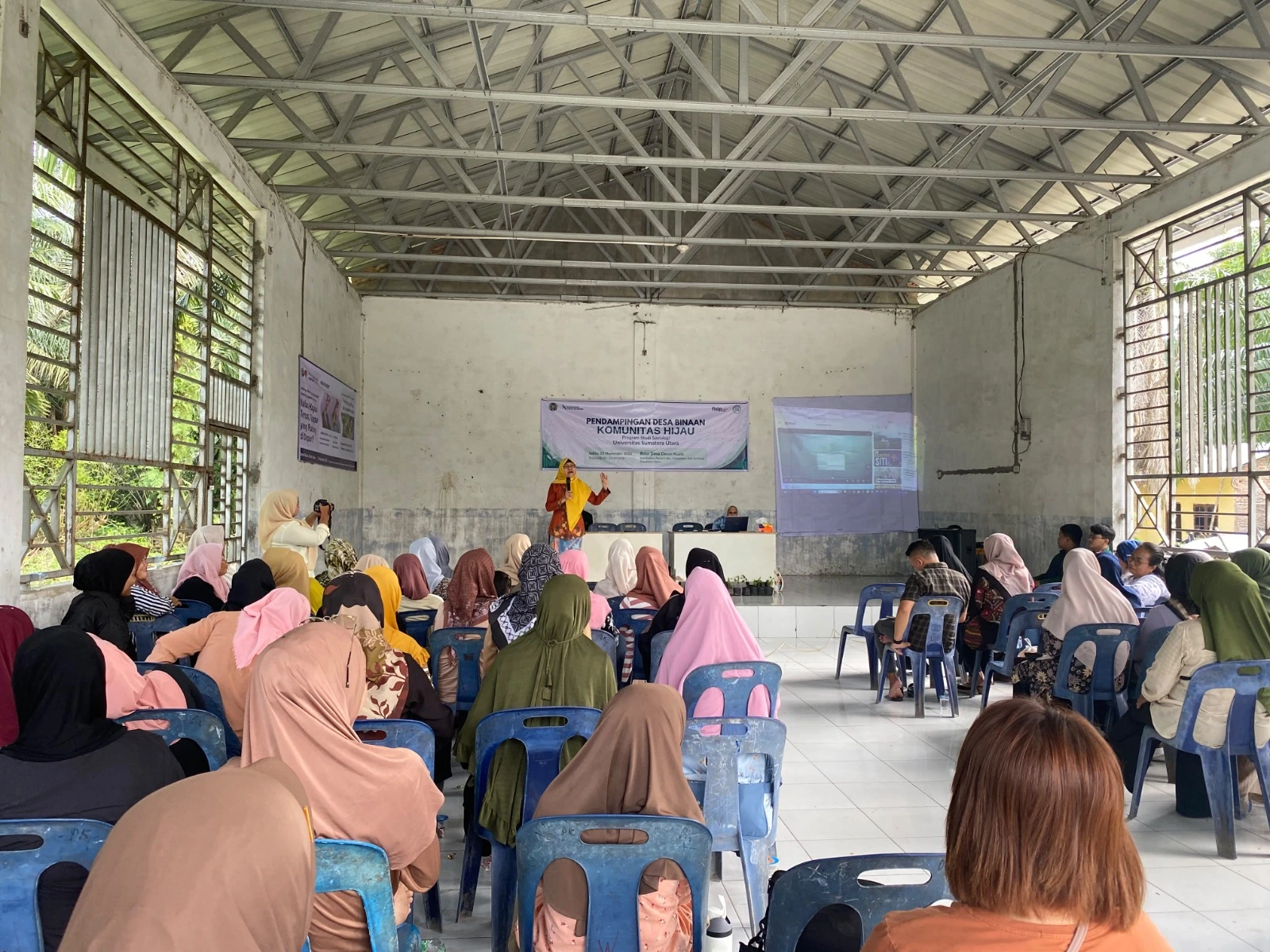
In addition to the presentations, the activity also featured discussions and question-and-answer sessions between the community and the speakers. Several topics were discussed, including livestock feed management, the utilization of organic waste, land cultivation, reducing household expenses, and marketing local products. Through these discussions, the community gained insights into various efforts that can be undertaken to manage the environment and utilize the village's existing potential. The sustainability of these efforts certainly requires active community involvement, the distribution of roles, the use of appropriate technology, and cooperation across generations and institutions.
As a follow-up to the activity, Dr. Linda Elida, M.Si., outlined plans for community assistance by Universitas Sumatera Utara in collaboration with HAPSARI and the Denai Kuala Village Government. This assistance will focus on three main areas: social mapping of climate-related issues and environmental vulnerabilities involving Rumah NUSA facilitators; assistance in the use of technology according to the community's needs and potential; and the preparation of a policy brief based on the mapping results and problems identified in the field. Through these assistance plans, it is hoped that the cooperation established can continue while supporting community self-reliance in realizing food and climate resilience in Denai Kuala Village.