


The Faculty of Social Sciences and Political Sciences, Universitas Sumatera Utara (FISIP USU), welcomed a visit from a member of Commission XIII of the Indonesian House of Representatives (DPR RI), Police Commissioner (Ret.) Dr. Maruli Siahaan, SH, MH, on Tuesday, June 10, 2025. The visit was part of the DPR RI’s Third Session Year Recess agenda. It was held in the form of a national seminar titled “Strategies to Overcome Prison Overcapacity in North Sumatra within the Framework of the Four Pillars of Nationality”, taking place at the FISIP USU Auditorium.
This seminar was held in response to the severe overcapacity crisis in correctional facilities (Lapas) across North Sumatra. Several prisons, such as those in Lubuk Pakam, Labuhan Deli, and Pancur Batu, are known to house more than twice their intended capacity. This condition negatively affects inmate rehabilitation, prison security, and the health of detainees, with many requiring referral to hospitals due to inadequate facilities and high disease transmission rates. The seminar featured three main speakers:
Police Commissioner (Ret.) Dr. Maruli Siahaan, SH, MH (Member of DPR RI Commission XIII),
Hamdi Hasibuan, ST, SH, M.Hum (Head of Services and Development at the Regional Office of the Directorate General of Corrections for North Sumatra), and Dr. Fernanda Putra Adela, S.Sos, MA.
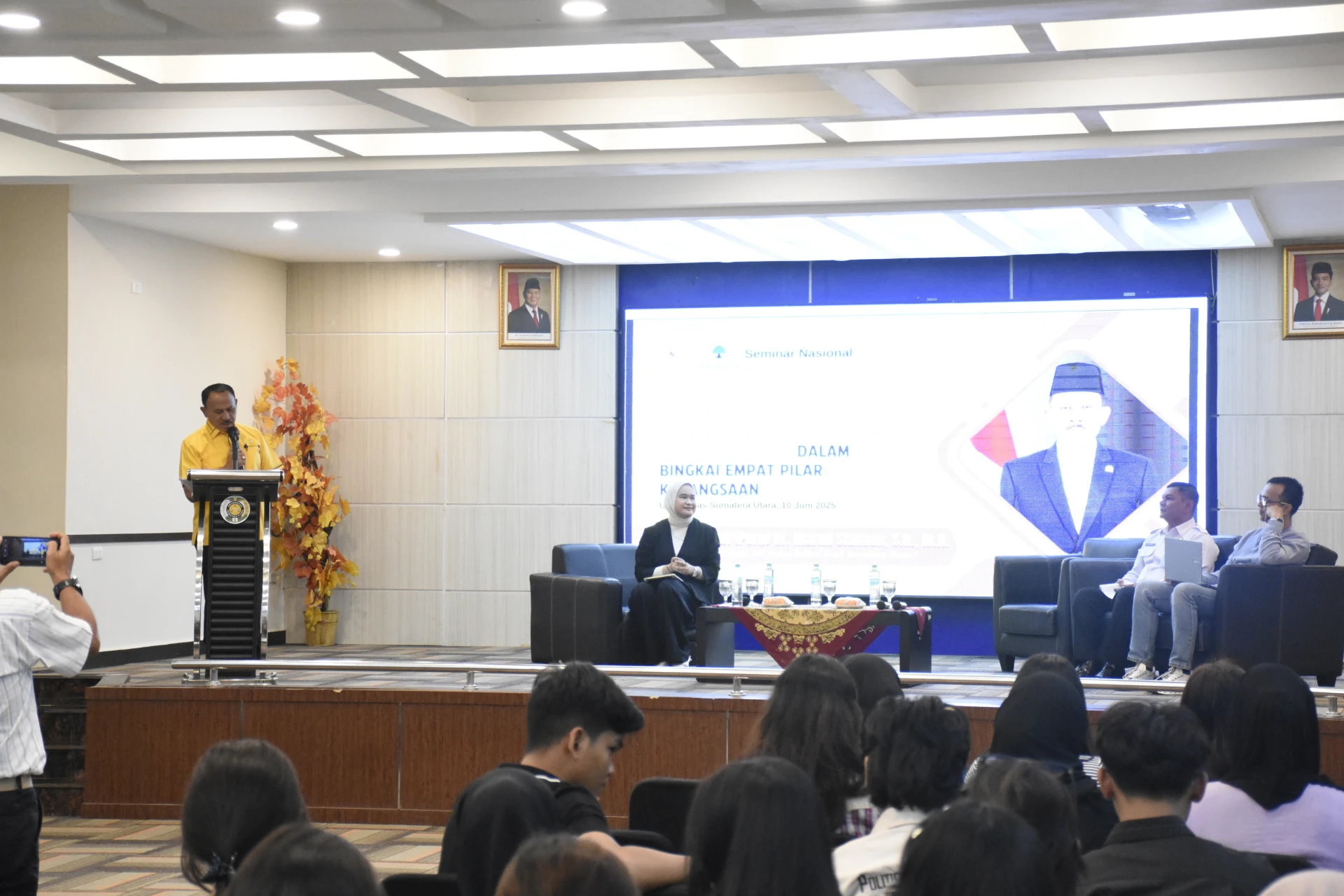
Ira Rizka Aisyah Lubis, S.Sos, M.Si, moderated the discussion. A key issue raised during the seminar was that approximately 80% of prison inmates in North Sumatra are involved in drug-related offenses. Moreover, North Sumatra ranks as the province with the highest number of prison inmates in Indonesia, surpassing East Java, Central Java, and DKI Jakarta. This reveals that the issue is not only technical but also deeply intertwined with law enforcement, public education, and the internalization of national values.
Overcapacity is also attributed to a lack of public education and participation in crime prevention. Therefore, educated communities must be more involved in disseminating legal understanding and fostering a sense of social responsibility. The values contained within the Four Pillars of Nationality—Pancasila, the 1945 Constitution, the Unitary State of the Republic of Indonesia (NKRI), and Bhinneka Tunggal Ika—are considered essential foundations for building a more humane correctional system.
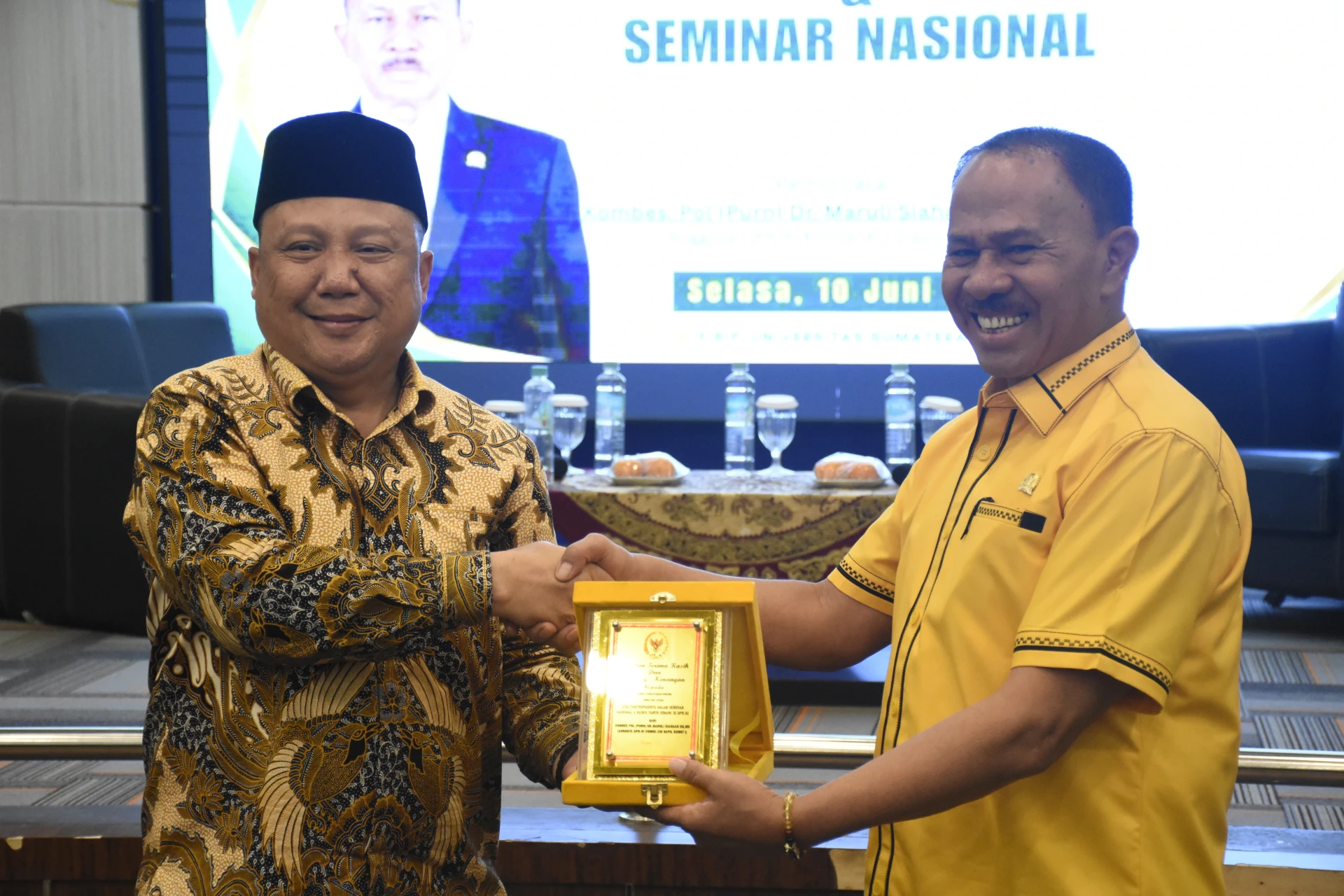
From a policy perspective, the seminar highlighted the importance of utilizing remission programs, amnesty, and parole to reduce inmate populations. However, this must be accompanied by regulatory improvements and increased public awareness of these programs. There was also a proposal to establish a dedicated Commission XIII within the DPR RI and to reconsider separating the functions of the Ministry of Law and the Ministry of Human Rights to enhance the focus and effectiveness of related policies.
The seminar produced various recommendations, including improving the rehabilitation system, simplifying social reintegration processes, and increasing public and academic institution involvement in monitoring correctional reforms. Through this activity, the Faculty of Social Sciences and Political Sciences, USU, reinforced its role as an educational institution committed to education and research and dedicated to contributing real solutions to national challenges. The involvement of the DPR RI in this forum affirms that universities can serve as strategic partners in developing public policies that are just, practical, and grounded in human values.
Writer: Jemima Frieda Lumbantobing