


The Faculty of Social and Political Sciences (FISIP) of Universitas Sumatera Utara (USU) organized the 2025 Summer Course themed “The Empowerment Practices for Disadvantaged People” on December 8–15, 2025. This international program was attended by 50 participants from more than 10 countries across Asia, Africa, and the Middle East, as part of efforts to strengthen USU’s academic internationalization.
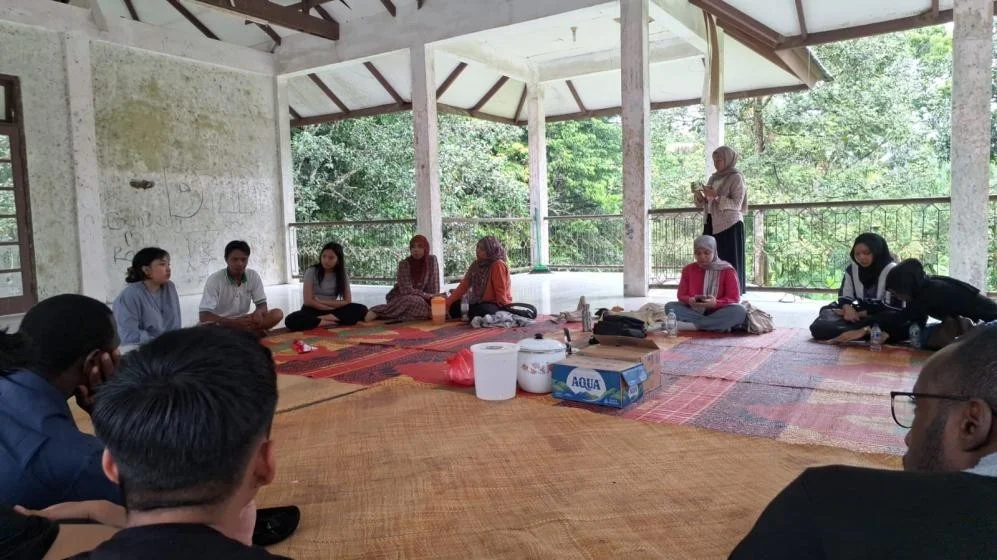
The Summer Course was organized by the Social Welfare Study Program of FISIP USU and implemented in a hybrid format, combining online and offline learning. Participants came from diverse university backgrounds and nationalities, including Malaysia, Pakistan, Bangladesh, Egypt, Nigeria, Tanzania, Kenya, Gambia, Guinea, Sudan, Madagascar, Myanmar, Tajikistan, as well as international students currently pursuing their studies at several universities in Indonesia. The Chair of the 2025 Summer Course, Dr. Husni Thamrin, S.Sos., MSP, stated that the diversity of participants’ countries of origin became the main strength of this program. “The presence of participants from various countries creates a multicultural academic atmosphere. The discussions become richer as participants bring social, cultural, and policy perspectives from their respective countries,” Husni said.
The series of activities began with academic sessions featuring three international speakers, namely Prof. Engr. Zamir Ahmed Awan from the Global Silk Route Research Alliance, Pakistan, as well as two academics from Universiti Sains Malaysia. The materials presented covered global geopolitical transformation, issues of homelessness and social welfare, and harm reduction policies in addressing homelessness and drug abuse.
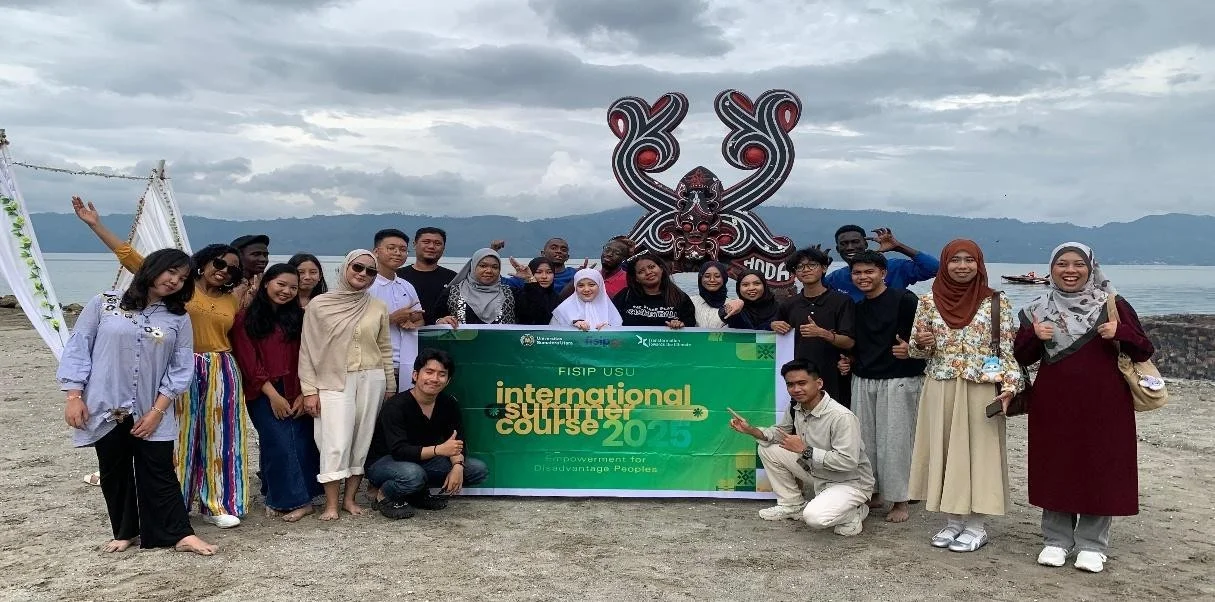
In addition to lectures, participants joined a three-day field trip on December 12–14, 2025, with the route Medan–Asahan–Parapat–Samosir. During these field activities, participants conducted social observations, mini research, and direct interaction with local communities to understand community empowerment practices empirically, particularly in the context of village development and community-based tourism in the Lake Toba area.
The Dean of FISIP USU emphasized that this activity is an important part of the faculty’s strategy in building global networks.“This Summer Course brings together students and academics from various countries in a single academic space. This is a concrete step by FISIP USU to strengthen its international reputation while contributing scholarly insights to humanitarian issues,” he stated.
As an output of the activity, the 2025 Summer Course successfully created an international learning environment, strengthened networks among students and lecturers across countries, and produced activity documentation in the form of photos and videos for national and international publication. Participants were also encouraged to prepare scientific articles based on the results of learning and field observations.
Through this activity, FISIP USU reaffirmed its position as a higher education institution that actively responds to global issues and is committed to the development of inclusive and sustainable community empowerment practices.